AI Woven Into Your Work: How an Ontology Lets AI Understand Your Company
The AI bolted onto each app only sees 'inside its own app.' But a company's real context lives 'between' the apps. Walking through concepts like ontologies, knowledge graphs, and GraphRAG, we explain how GREND's AI understands your entire company.
These days, nearly every piece of software ships with an 'AI feature.' Mail has mail AI, documents have document AI, meetings have meeting AI. It's convenient, but they share one limitation: these AIs only see inside their own app.
The limits of AI bolted onto each app
Mail AI knows only your inbox; project AI knows only your task list. But the answer to a question like "Is our team really running well this quarter?" is scattered across mail, projects, approvals, leave, and schedules. An AI confined to a single app can never answer it, because the real context lives in the 'relationships between' the data.
One data platform, one ontology
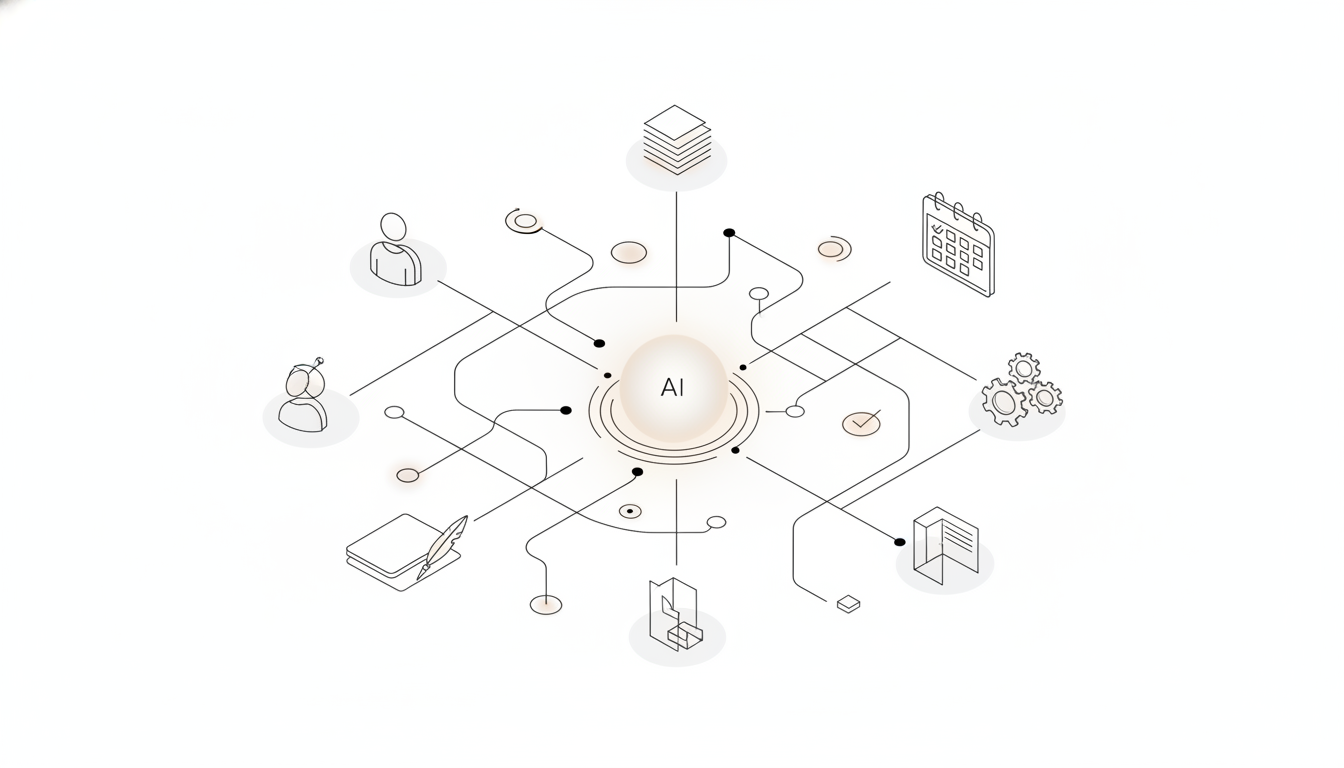
At GREND, all of your work runs on a single data platform. That's why our AI connects people, organizations, projects, documents, and schedules into a single knowledge graph (ontology) to understand them. It's an intelligence that oversees the entire company—something scattered SaaS tools can never reach.
When a knowledge graph meets RAG — GraphRAG
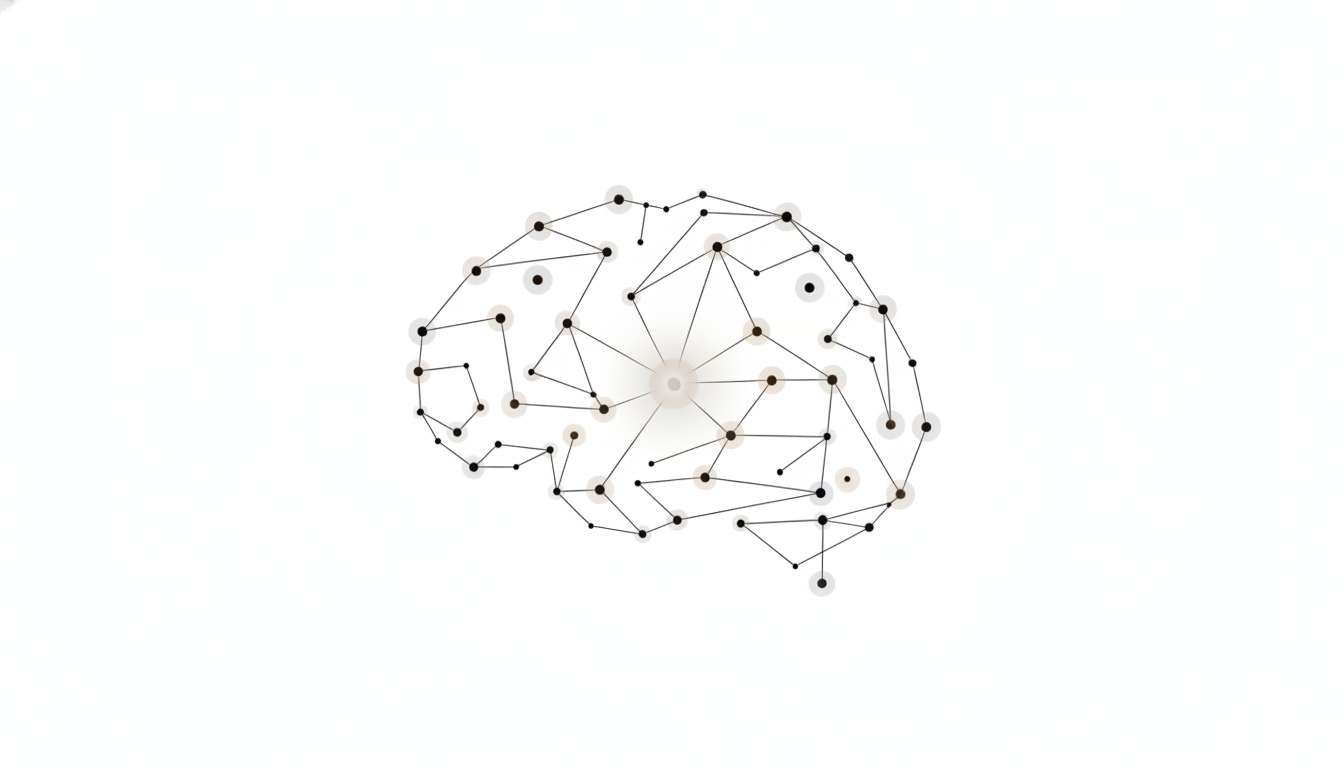
A key technique that has recently raised the reliability of generative AI is RAG. To keep models from making answers up, it 'retrieves' a company's actual documents and supplies them as grounding evidence. GraphRAG, published by Microsoft Research in 2024, takes this a step further: rather than plain document search, it uses a knowledge graph to connect and summarize scattered information. It's especially powerful for questions that require reasoning across many documents.
What this makes possible
- "Summarize this week's progress" — it answers in one shot, cutting across projects, approvals, leave, and schedules.
- It pulls action items out of meeting notes and assigns them to owners automatically.
- It searches by 'meaning' rather than keywords (semantic search), finding answers across the entire company.
- It performs summarization, reasoning, and automation on its own, grounded in the connected data.
The key isn't a 'smarter model' but 'better-connected data.' Even the same AI only produces useful answers once a company's context is woven into a single graph.
AI is no longer an add-on—it's the default of the operating system.
What makes GREND's AI special isn't the model but the ontology beneath it. An AI that understands a company as a single web of meaning—that is what 'AI woven into your work' truly looks like.